

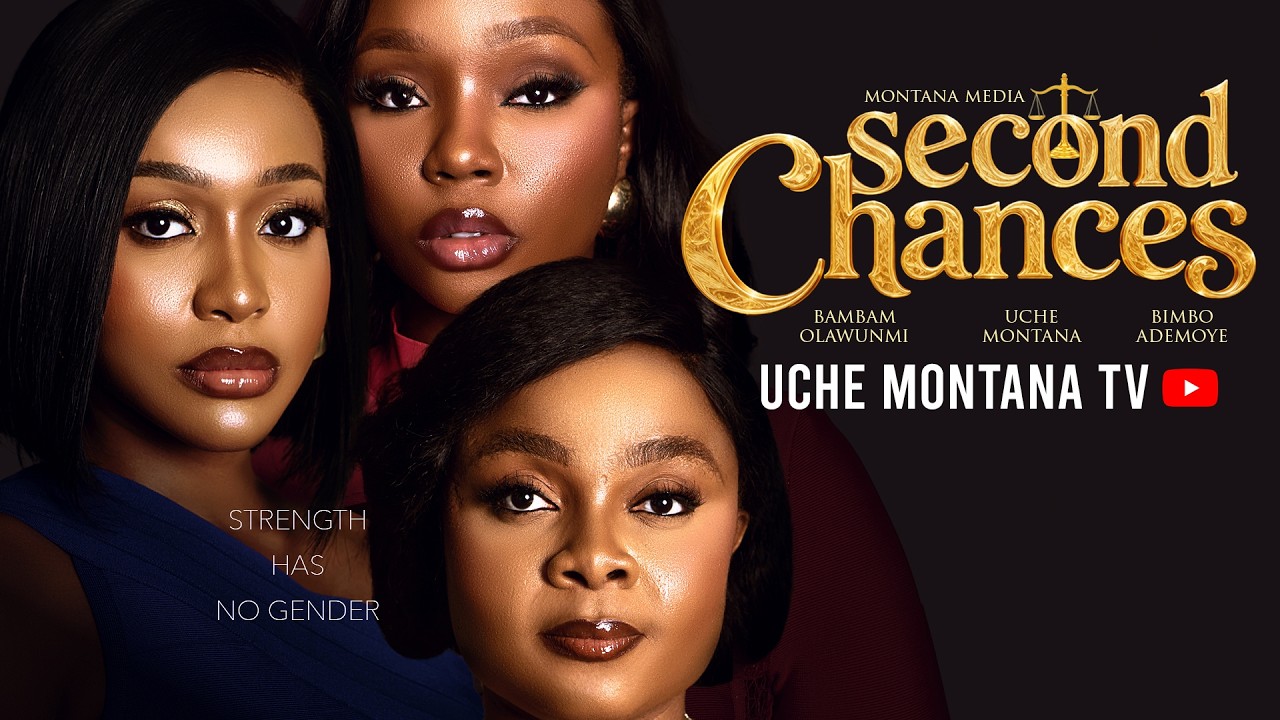
Bringing Bimbo Ademoye, BamBam Olawunmi, and Uche Montana together in Second Chances (2026) immediately raises expectations. These are three actresses who have, in different ways, established themselves as dependable faces of contemporary Nollywood, capable of carrying both emotional and dramatic material. On paper, a film built around their presence, a bitter custody battle, questions of betrayal, and the possibility of redemption should have been a gripping emotional drama. Unfortunately, Second Chances often feels like a film with a strong premise that is let down by the way its story is written and resolved.
The biggest problem is that the film repeatedly confuses conflict with drama. Instead of allowing the custody battle to develop through believable disagreements, legal complications, and emotionally difficult choices, the story often pushes its characters towards confrontation simply to keep the tension alive. The early legal strategy involving Lydia (Bambam Olawunmi) and her husband, Mr Adeyemi (Rotimi Adelagan), is a good example. Rather than presenting a thoughtful attempt to find a way forward for a mother trying to regain access to her children, the lawyers quickly adopt an almost combative “war” mentality. It makes the professionals feel less like people navigating a complicated legal case and more like characters positioned to manufacture the next confrontation.
This problem extends beyond the office. Several of the characters make decisions that are difficult to understand emotionally. Cynthia’s (Uche Montana) suspicion that Jadesola (Bimbo Ademoye) deliberately set her up with Benson/James (Elozonam Ogbolu) is one of those moments. The accusation itself could have opened up a powerful conversation about trust, secrecy, and betrayal, but the film rushes through the process. There is little room for verification, reflection, or even a proper attempt at communication before emotions boil over. The result is dramatic, but not particularly convincing. The audience is expected to accept the reaction because the screenplay needs the relationship to fracture at that point.
The same issue can be seen in Jadesola’s storyline. Her character is introduced with a seemingly ordinary romantic relationship with Kola (Yemi Cregz), only for the relationship to be thrown into turmoil when he discovers that she has a seven-year-old child whom she has kept secret from him. Jadesola explains that her decision was rooted in fear and experience. She had been trying to protect her son from men who might walk away as soon as they discovered she had a child. It is a potentially interesting dilemma because neither character is entirely unreasonable: Jadesola’s fear is understandable, while Kola’s sense of betrayal is equally difficult to dismiss.
Unfortunately, the film does not explore this conflict as deeply as it could. Kola’s discovery quickly turns into a crisis of trust, with him telling Jadesola that he no longer knows the woman he intended to marry. He eventually asks her to leave. The premise offers an opportunity to examine the complicated ways that past trauma can affect present relationships, particularly the tension between protecting oneself and being completely honest with a partner. Instead, the subplot moves rather quickly from revelation to confrontation, leaving the emotional consequences feeling somewhat underdeveloped. Considering Ademoye’s ability to bring vulnerability and emotional depth to her characters, Jadesola’s story could have benefited from more room to breathe.
ALSO READ: MOVIE REVIEW: The Strange Woman looks beyond the dangers of hiring a house help
The dialogue does not always help. There are several scenes in which Cynthia and her colleagues discuss the ethics of the custody case and the motivations of their law firm. The repeated emphasis on billing hours, money, and profit eventually becomes heavy-handed. The point is clear fairly early, yet the screenplay continues to underline it instead of trusting the audience to understand the firm’s culture from the characters’ actions. Good writing often allows a character’s behaviour to reveal who they are; Second Chances too often has its characters explain themselves.
Cynthia’s relationship with Lydia is another example of the film sacrificing realism for emotional convenience. Cynthia is introduced as a highly competent lawyer, but her decision to reveal intimate details about her own childhood and personal life to Lydia during their tea meeting feels unusually personal for a professional relationship. One can understand what the filmmakers are trying to achieve: they want the two women to find common ground and for Cynthia to connect with Lydia beyond the legal case. But the scene feels written to produce that emotional connection rather than allowing it to develop organically.
The film also asks the audience to suspend disbelief when it comes to Samson’s household. Samson is presented as an extremely wealthy and influential man who has kept his children away from Lydia for years. Yet Lydia appears able to confront his family and staff and get close to the children with surprisingly little resistance. There is a disconnect between the intimidating, powerful man the film describes and the rather porous environment in which his family operates. If Samson is really as determined to keep Lydia away as the story suggests, one would expect considerably more resistance and security around his household.
The Benson subplot suffers from a similar problem. His arrival is clearly intended to introduce another layer of danger and uncertainty into the story, but the execution makes the threat difficult to take seriously. A man portrayed as dangerous and desperate is able to walk into a corporate law office, make demands, and then simply be dealt with by security. There is little sense of the consequences that should follow such an incident. Instead of intensifying the main story, the subplot feels like a dramatic detour inserted to create another crisis.
Perhaps the most frustrating aspect of Second Chances is the way some of its emotional conflicts are resolved. Henry’s (Kwesi Blay) movement from anger and betrayal to becoming supportive happens too quickly. Forgiveness is certainly possible, and people do sometimes surprise us with how quickly they move beyond hurt. But in a film that places so much importance on secrecy and betrayal, the emotional journey towards forgiveness needs to be earned. Here, the transition happens with so little struggle that the earlier conflict begins to feel less consequential.
The same issue affects the custody dispute itself. The film spends a considerable amount of time presenting Samson as an entrenched opponent, making the battle appear almost impossible to resolve. Yet when the story finally arrives at the trust agreement, the transition feels remarkably sudden. The problem is not that Samson eventually changes his position; a story about second chances should naturally leave room for change. The problem is that the film does not give us enough of the journey that leads him there. The ending therefore feels more convenient than satisfying.
But Second Chances has the ingredients of a much stronger film than the finished product manages to deliver. Its strongest asset is its cast. Bimbo Ademoye, BamBam Olawunmi and Uche Montana bring recognisable star appeal to the production, and the film deserves credit for placing three popular actresses within a story that attempts to tackle family, motherhood, betrayal, forgiveness and redemption. Its subject matter is also relevant and emotionally accessible, and there are moments when the performances manage to rise above the limitations of the screenplay.
There is a worthwhile story somewhere inside Second Chances. Unfortunately, it is buried beneath forced conflict, rushed emotional transitions, repetitive dialogue, and resolutions that are not sufficiently earned. With a tighter screenplay, more nuanced characterisation and greater confidence in allowing emotions to develop naturally, the film could have been a far more powerful exploration of what it really means to get a second chance.
Second Chances is streaming on Uche Montana TV.


