

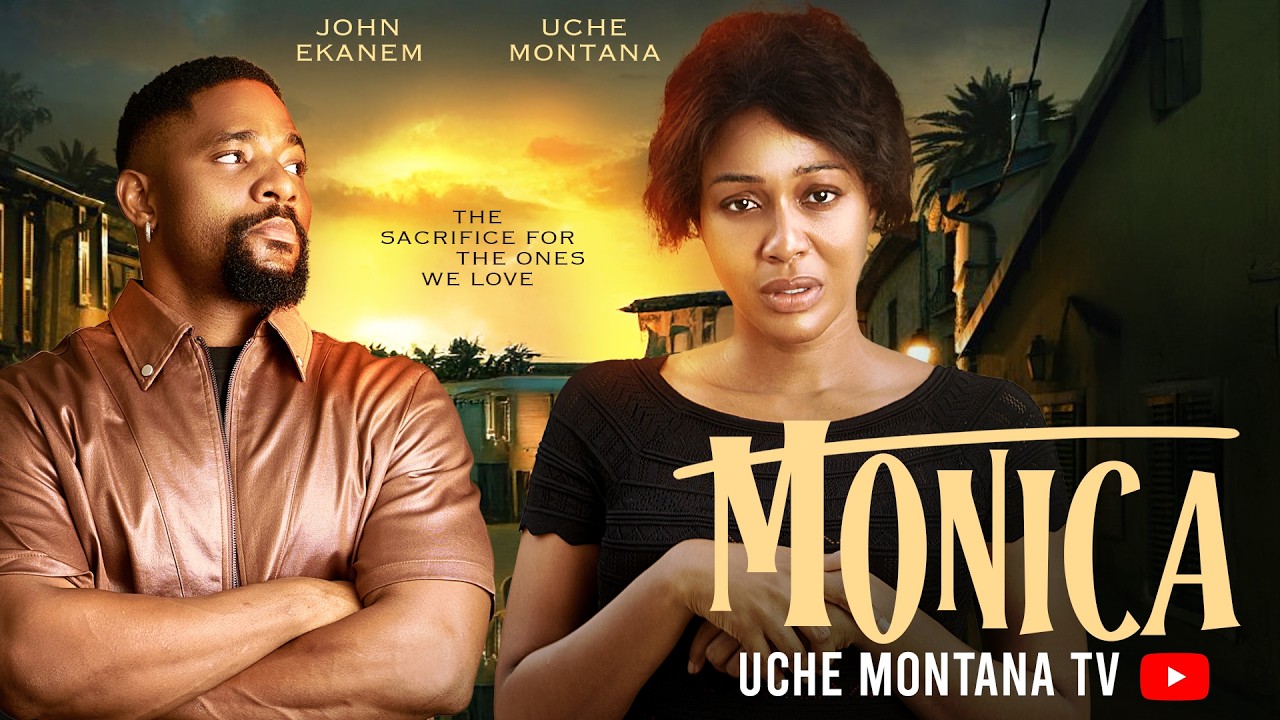
There is something almost unsettling about how Monica creeps under your skin. It is not just another emotional Nollywood story you watch, sigh, and move on from. It lingers. It provokes. It forces you to question the neat moral formulas we grew up believing.
Produced by Uche Montana, the film has quietly become one of the most talked-about YouTube releases in recent weeks, not just because of its reach but because of the conversations it has sparked. This is not the kind of film you simply watch. It is the kind that stays with you long after the screen goes dark.
From the very beginning, it is clear that this is a film that refuses to give you comfort.
What stands out immediately is how the film dismantles the idea of karma. We like to believe that if you are good, life will reward you neatly, and if you are bad, consequences will come swiftly. Monica does not play by that rule.
There is a particular stretch in the story where Monica (Uche Montana) continues to endure emotional neglect and manipulation from the family she has sacrificed everything for. You expect a turning point where justice balances the scales. It does not come when you think it should. Instead, the film delays that satisfaction, almost frustratingly so.
I found the film deeply painful and emotionally heavy. There is a point where it almost breaks you, because it feels too real. The truth the film quietly suggests is uncomfortable. Karma is not immediate. Sometimes, people get away with things for longer than we think they should or even forever! And sometimes, the person who suffers the most is the one who did everything right.
Then there is the second idea the film pushes, and this is where it becomes deeply personal. The need to prioritise yourself.
Monica is written as someone who constantly puts others first. Family. Relationships. Expectations. Society. She bends herself into shapes just to keep the peace. She gives up furthering her education, scaling her business, and marrying the love of her life just for her family to feed well and be better off. There is a scene where she makes a major personal sacrifice, one that clearly goes against her own happiness, just to meet her mother’s demand. It is not dramatic in the loud Nollywood sense. It is quiet. Painfully quiet. And that is what makes it powerful.

I could feel Monica’s pain through the screen. The emotional weight of her decisions lands heavily because it mirrors real-life choices many people make and later regret.
The film does not shout its lesson. It shows it slowly. Every time Monica ignores her own needs, something in her life cracks a little more. By the time she begins to reclaim herself, you already understand the cost of waiting too long.
ALSO READ: ‘A Flicker of Us’ Review: An Honest Portrait of Friendship, Betrayal, and the Weight of One Moment
The third layer of the film is perhaps the most subtle but also the most profound. Do not change yourself to please people. Yet, remain kind.
This is where Monica becomes almost philosophical. The film does not punish kindness. It questions misplaced kindness. Monica’s flaw is not that she is kind. It is that she extends that kindness to people who consistently take advantage of it.
There is a turning moment where she begins to set boundaries. Not aggressively. Not bitterly. Just firmly. And interestingly, that is when things begin to shift.
I see the film as very educative and captivating. Beyond entertainment, it carries a quiet moral weight. What the story seems to argue is this. You do not need to lose your goodness to survive. But you must stop offering it at your own expense.

And somehow, without being preachy, the story hints that the universe does respond. Not always in the dramatic, cinematic way. But in small, almost unnoticed corrections that come when you finally choose yourself.
ALSO READ: ‘Son of the Soil’ Review: Suspenseful and Gritty, Yet Caught in Plot Convenience Lacking Depth
Performance-wise, Uche Montana carries this film on her shoulders, and she does it with restraint. No unnecessary exaggeration. No forced tears. Just controlled emotion that builds over time. It is the kind of acting that makes you uncomfortable because it feels too familiar.
The supporting cast, John Ekanem as Pascal, Chris Biyibi as Papa Monica, and Blessing Onwukwe as Mama Monica, complements the story well, especially in portraying the kind of everyday relationships that look normal on the surface but are deeply unhealthy underneath.
What makes the film even more compelling is how it forces you to take a position. At some point, you may feel frustrated with Monica for tolerating too much. At another point, you may find yourself defending her, understanding exactly why she made those choices.
That tension is what makes the film touching. It is not trying to be liked. It is trying to be real.
In the end, Monica is not about revenge or poetic justice. It is about awareness. It is about the slow, sometimes painful process of realising that being a good person should not come at the cost of your own peace.
And maybe that is why it is resonating so strongly.
Because somewhere in that story, you may begin to see yourself.
Monica is streaming on Uche Montana TV on YouTube.


