

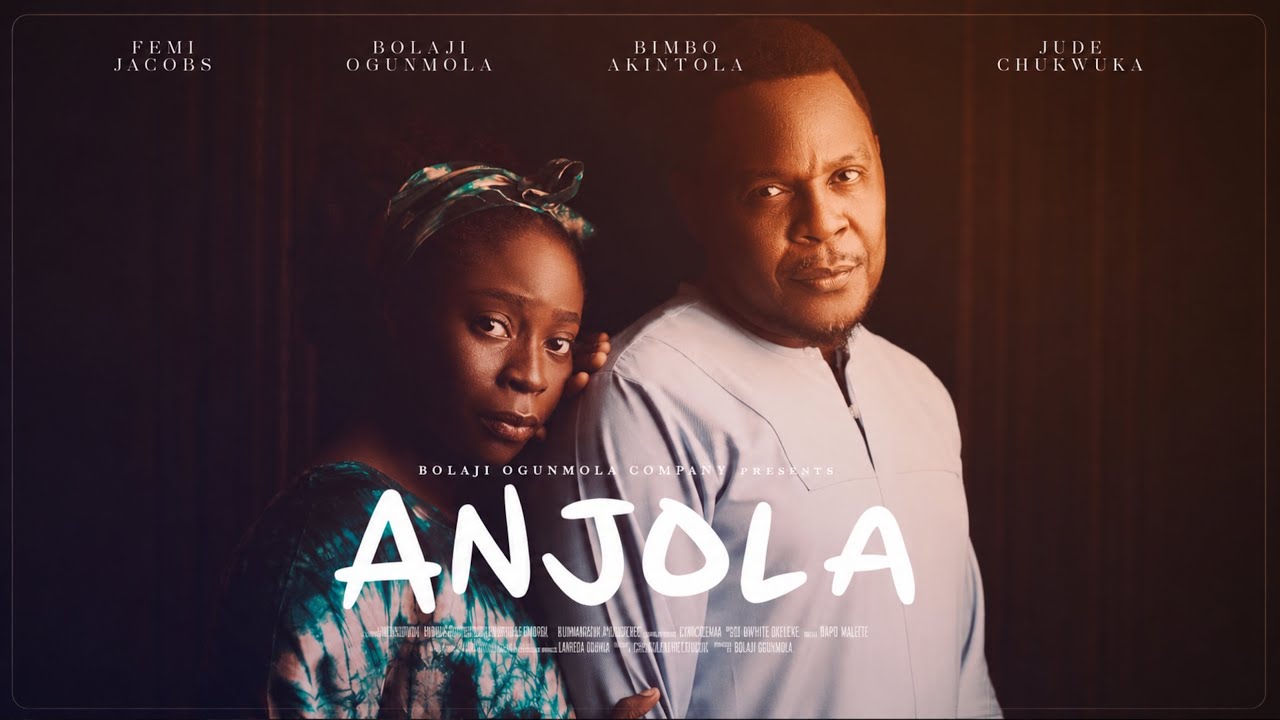
Have Nigerians come to terms with surrogacy yet? Is motherhood simply the act of birthing a child, or does it extend to the emotional architecture of care, sacrifice, and presence? What is the ultimate goal of marriage: companionship or procreation? And in cases where childbirth becomes medically or emotionally difficult, do women perceive surrogacy as relief, replacement, or quiet surrender? These are the thematic tensions the film Anjola attempts to unravel, though it does so in a rather uneven and, at times, emotionally exhausting manner.
To situate the film within reality, infertility remains a deeply sensitive issue in Nigeria. The World Health Organization estimates that about 10 to 15 percent of couples globally experience infertility, and studies in sub-Saharan Africa suggest that the social burden often feels even heavier due to cultural expectations around lineage and motherhood. In Nigeria, assisted reproductive technologies such as IVF are increasingly used, but success rates typically vary between 20 and 45 percent per cycle, depending on age, clinic quality, and underlying health conditions. Costs remain prohibitive for many couples, often ranging from hundreds of thousands to several million naira per cycle in private fertility centres. Surrogacy, meanwhile, exists in a largely unregulated legal space in Nigeria, which creates ethical ambiguity, emotional strain, and concerns around consent, compensation, and parental rights. These realities form the emotional undercurrent that Anjola attempts to dramatise.

Folarin (Femi Jacobs) and Anjola (Bolaji Ogunmola) have been married for seven years without a child. After enduring repeated miscarriages and multiple attempts at IVF and other medical interventions, they arrive at surrogacy as what appears to be the final possibility. Folarin recalls the doctor’s warning that Anjola’s health made it risky for her to carry a pregnancy to term, a detail that hangs over the narrative like a quiet but persistent shadow. The film situates us within a marriage already fatigued by hope, disappointment, and the silent erosion that comes with repeated loss.
ALSO READ: “Teacher’s Boy” Review: A moving but uneven story of a single mother’s choices
What makes Anjola structurally distinctive is its temporal compression. The entire story unfolds over a single night, with past events reconstructed through dialogue and emotional recollection. This confined structure intensifies the psychological weight of the film. Through conversations that are at once intimate, confrontational, and deeply revealing, the film exposes the emotional terrain of surrogacy, particularly for women who must grapple with the idea of another woman carrying what they have long prayed for.
At several points, these conversations escalate into arguments that expose differing emotional responses to infertility within marriage. The film subtly gestures toward a broader truth often ignored in public discourse, that men are also deeply affected by childbearing struggles, though their pain is less visible and less openly discussed. Femi Jacobs delivers a performance that feels unforced and deeply human. His portrayal of Folarin carries a restrained vulnerability, and in moments where he recounts his own emotional suffering, there is a rawness that does not feel performed but lived. It is in these moments that the film briefly achieves its most authentic emotional register.

Anjola, on the other hand, is a study in emotional containment and eventual outburst. Bolaji Ogunmola embodies the psychological tension of a woman caught between medical reality, cultural expectation, and personal grief. Her performance is marked by restraint that gradually gives way to emotional outbursts. What stands out in her interpretation is not just sadness, but exhaustion, the kind that accumulates after years of hope, disappointment, and repeated medical cycles. IVF failure, which in real-life Nigerian contexts often carries both financial strain and emotional trauma, is not merely referenced in the film but felt through her body language and tonal shifts.
ALSO READ: ‘Monica 2’ Review: A Sequel That Carries the Weight of Black Tax and Feels Too Close to Home
The strength of Anjola lies in how it captures the quiet but persistent tensions around childbirth in marriage. In many Nigerian households, infertility is not only a medical condition but a social pressure point that affects identity, intimacy, and even self-worth. Surrogacy, though increasingly discussed in cities, still carries stigma, ethical uncertainty, and emotional complexity, particularly because Nigerian law does not yet provide a fully standardiszed framework governing surrogate agreements. This ambiguity often leaves couples navigating both hope and fear in equal measure.
However, while the film’s ambition is clear, its emotional delivery is not always balanced. At times, the dialogue feels overly extended, almost as though the film is more invested in articulating ideas than sustaining narrative rhythm. Yet within these uneven stretches, the emotional core remains intact, largely because of the performances anchoring it.
What lingers in the end is that Anjola portrays childbearing struggles as a shared burden within marriage, one that does not belong exclusively to women, even though they often bear the most visible weight. It quietly suggests that love in such moments must extend beyond desire for biological continuity into understanding, patience, and emotional solidarity. Still, the film also raises uncomfortable questions about identity and agency, particularly for women, which it does not fully resolve. What remains, however, is a sobering reflection on how deeply reproductive expectations shape marital dynamics, and how fragile the balance between love and pressure can become when children enter the equation as both hope and expectation.
Anjola is streaming on Bolaji Ogunmola TV on YouTube.


