

By Oluwatosin Balogun
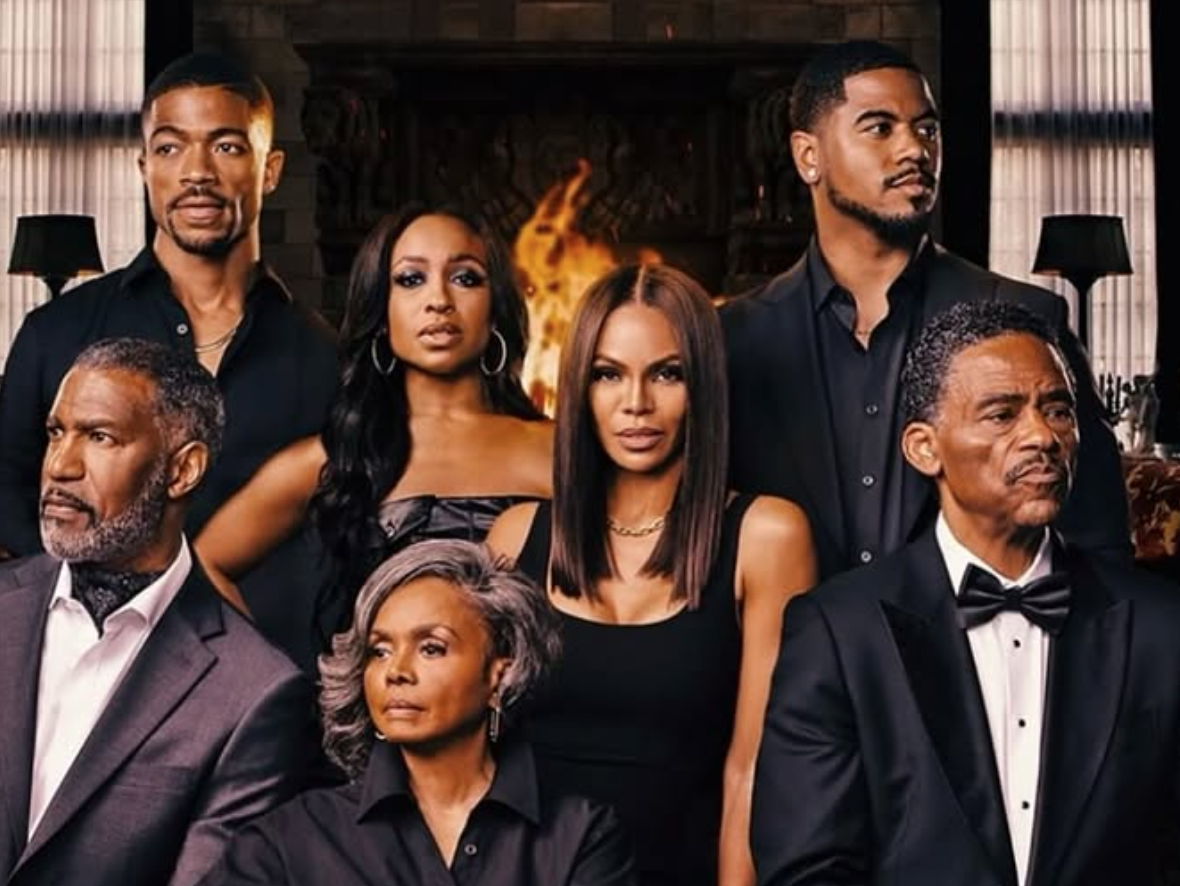
Tyler Perry’s Beauty in Black has quickly transformed into one of Netflix’s most talked-about drama series, driven by betrayal, ambition, sexuality, and shifting power within the Bellarie empire. The show debuted strongly and climbed to No. 1 on Netflix’s global TV chart with about 8.7 million views in its first full week, after opening with 5.6 million views in just four days. It also reached No. 1 in 28 countries during its early run and remained in the platform’s Top 10 for several weeks, underscoring its global appeal.
Beyond the numbers, the show’s popularity has been fueled by its morally complex characters, Kimmie,
Horace, Mallory, Roy, Norman and Olivia, all flawed, ambitious and deeply human. There is no single innocent figure in the story, as every character manipulates, betrays, or compromises at some point, making Beauty in Black a drama that has become a global streaming hit powered by controversy. From its first release, Beauty in Black attracted attention for its provocative themes: power, sexuality, betrayal and family conflict.
The drama follows two women from opposite worlds whose lives intersect within a wealthy cosmetics dynasty riddled with secrets and manipulation. The mix of scandal, romance and corporate warfare helped the show surge in Netflix’s global rankings. In its early weeks, it climbed to the top of the Netflix charts and continued to trend internationally, drawing millions of viewers and sparking intense social media debate. Notably, the appeal lies in the show’s unpredictability.
Relationships collapse. Alliances shift. Loyalty disappears. And desire often overrides logic.
Kimmie’s Rise From Victim To Power Player

Kimmie (Taylor Polidore Williams) begins as one of the most vulnerable characters, trapped in exploitation and fighting for survival. But as the story progresses, she evolves into a calculating strategist capable of reshaping the Bellarie empire. Her transformation is central to the show’s momentum. She studies the players, identifies weaknesses and gradually positions herself within Horace’s inner circle. By the later episodes, she is no longer trying to escape the system; she is learning to control it. Kimmie’s evolution also reflects the show’s broader theme: power is not inherited; it is taken.
What makes Kimmie’s transformation even more compelling is the power structure she walks into. Before her arrival, Mallory was not just influential; she was feared. Her presence shaped conversations, her approval determined access, and her disapproval often meant isolation. Staff deferred to her authority, family members navigated her carefully, and even Roy’s instability did little to weaken her dominance.
Mallory’s grip on the Bellarie empire was built on confidence, calculation and control. Kimmie changes that dynamic not through confrontation but through patience. She studies Mallory, understands the emotional fractures within the family and gradually inserts herself into spaces previously controlled by Mallory. The shift is subtle at first, but it grows stronger as Horace begins to trust Kimmie’s instincts.
By the time the balance of power changes, Mallory is no longer the unquestioned force she once was. Kimmie effectively dethrones the most feared woman in the Bellarie empire, proving that power in Beauty in Black is never permanent, only strategic.
Horace: Mentor and Builder of Stars
Horace (Ricco Ross) stands at the centre of the Bellarie empire as mentor, kingmaker and builder of stars. Unlike the others, he does not fight loudly for control.

Instead, he observes and promotes individuals he believes can sustain the business. Mallory rises under his structure, and Olivia gains influence through proximity, then comes Kimmie, his boldest choice. Rather than handing power to a traditional family member, he chose Kimmie, a total stranger. Horace values intelligence, loyalty and survival instinct more than bloodline. When his family members show instability, ego or emotional weakness, he quietly looks elsewhere. His decision to elevate Kimmie reshapes the entire Bellarie hierarchy, thereby creating new leadership. Horace becomes the architect behind the show’s biggest power shift, the transition from inherited dominance to strategic control.
Mallory: Admired and Fear, But Far From Innocent

Mallory (Crystle Stewart) is introduced as the polished face of the Bellarie empire, elegant, confident and powerful. But beneath the composure lies ambition and insecurity. As Horace’s attention shifts toward Kimmie, Mallory adapts quickly, recalibrating and eventually aligning strategically. The move reinforces her intelligence but also reveals her willingness to compromise. Despite her popularity among viewers, Mallory is far from innocent. She manipulates situations, protects her position and sometimes prioritises survival over loyalty. These contradictions make her both admired and controversial. Mallory also fuels the infidelity storyline by accusing her husband, Roy, of cheating while she is also entangled in her own questionable relationship with Calvin and later Officer Alex in season two, exposing the same betrayal she condemns.
This contradiction heightens tension, as Mallory positions herself as the wronged partner while also navigating her own dalliances.
Before Kimmie’s rise, Mallory’s authority defined the emotional and corporate climate of the Bellarie empire. She commanded respect and fear in equal measure. Her calculated decision-making, sharp instincts and ability to control narratives made her appear untouchable. Even when personal scandals surrounded her marriage, she maintained composure and projected strength. That balance of elegance and ruthlessness made her one of the most intimidating characters early in the series.
However, Kimmie’s arrival disrupts that dominance. For the first time, Mallory is forced to adapt rather than dictate. Her authority becomes contested, and the once-feared queen now has to share influence. This shift does not weaken Mallory’s intelligence, but it changes her role from unquestioned leader to strategic survivor. The evolution highlights the show’s recurring theme: power constantly shifts, and even the most feared players can be outmanoeuvred.
Roy: Sexual Infidelity And The Collapse Of Control
Roy (Julian Horton) embodies emotional instability within the Bellarie family. His insecurity, ego and personal relationships drive much of the show’s chaos. Sexual infidelity plays a major role in his storyline, affairs and emotional entanglements create tension, expose secrets and weaken alliances. His inability to separate desire from leadership ultimately accelerates his downfall. Roy’s character reflects one of the show’s key ideas: power collapses when discipline disappears.

Roy’s instability is further compounded by substance abuse, which deepens his emotional volatility and weakens his judgment. Drugs cloud his decision-making, intensify his insecurities and worsen his already fragile relationships. Combined with sexual infidelity, this lack of discipline accelerates his loss of control both at home and within the business structure. His actions create ripple effects that destabilise alliances and expose cracks within the Bellarie family.
Norman: Loyalty Blurred By Ambition

Norman (Richard Lawson) appears composed and loyal, but his character gradually reveals ambition and strategic calculation. He navigates his loyalty to Olivia while protecting his own influence. Like the others, Norman has moments that blur moral lines, like his infidelity with his brother’s wife, Olivia, involvement in sex exploitation and trade amongst others. His decisions are shaped by opportunity rather than principle. This reinforces the show’s central message: no one in the Bellarie empire is completely innocent.
Olivia: Elegance Masking Strategy
Olivia (Debbi Morgan) represents quiet power. She appears composed and measured but often manoeuvres subtly to maintain control. Her interactions with Norman and other family members reveal calculation beneath elegance. She protects her interests, sometimes manipulating outcomes behind the scenes. These choices highlight her complexity and reinforce the show’s focus on flawed characters.

Olivia is similarly drawn into the web of infidelity through her complicated involvement with Norman before her divorce from Horace. Olivia’s dalliance reinforces the show’s theme that beneath elegance and composure, even the most calculated players are vulnerable to desire and compromise, as seen in her dealings with younger men.
Olivia’s ruthlessness becomes even more striking as the story unfolds. Beneath her composed demeanour lies a character capable of calculated emotional manipulation. Her involvement with a younger boyfriend early in the storyline hints at her willingness to pursue her desires regardless of the consequences. She navigates relationships strategically, protecting her interests while maintaining a calm, authoritative demeanour.
READ ALSO: What Top Nigerian Celebrities Are Saying as Fuel Price Hits All-Time High
At different points, her actions appear to undermine Horace, while her positioning around Charles, whom she publicly presents as her favourite son, suggests deeper strategic motives. This quiet manoeuvring makes Olivia one of the most dangerous figures in the Bellarie empire. Her power does not come from loud confrontation but from subtle influence, emotional control and calculated decisions that reshape outcomes without drawing attention.
RECOMMENDED ARTICLE:
‘Monica’ Review: A Story That Questions Karma, Goodness, and the Cost of Choosing Yourself
How Sex, Desire and Betrayal Drive The Drama
One of the biggest reasons Beauty in Black has resonated globally is its bold exploration of sexual relationships and infidelity. Romance in the show is rarely innocent. It is strategic, emotional and often dangerous. Affairs shift alliances. Desire fuels betrayal. Intimacy becomes leverage. These dynamics create emotional volatility, keeping viewers engaged. The show’s willingness to explore these themes openly has sparked debate and increased its viral appeal.
The show also explores how desire blurs judgment and reshapes relationships in unexpected ways. Attraction often emerges amid betrayal, creating emotional complications that alter alliances.
Imagine discovering infidelity within the family, and instead of clarity, desire introduces another layer of temptation, characters chasing nothing more than a forbidden “cookie” while loyalties collapse around them. This emotional volatility fuels the drama and keeps viewers guessing.
A Story Built On Human Frailties
Unlike traditional dramas, Beauty in Black offers no clear hero. Every character is flawed. Kimmie manipulates to survive, Mallory calculates to remain powerful, Horace controls outcomes, Roy self-destructs through desire, Norman strategises quietly, Olivia protects herself first, amongst other examples. These imperfections make the characters relatable and unpredictable.
Another striking element behind Beauty in Black’s success is that much of the cast was not exactly well-known mainstream actors before the series. Unlike many high-profile dramas built around established stars, the show relies heavily on relatively unfamiliar faces who were not previously associated with major television hits. Yet, despite that, the performances feel convincing, layered and emotionally intense. The actors embody their roles with confidence, delivering believable portrayals of ambition, vulnerability, manipulation and desire. This lack of celebrity distraction actually strengthens the storytelling, allowing viewers to fully immerse themselves in the Bellarie world. In many ways, the cast’s delivery proves that strong character-driven drama does not depend on star power, but on commitment, chemistry and storytelling.
The Twist That Changes Everything
The season builds toward a dramatic shift in power as Horace, Kimmie and Mallory align strategically. Their coordinated move reshapes the Bellarie empire and removes key threats. The twist confirms Horace’s long-term strategy: build new leaders, then hand them power.
Why Audiences Can’t Stop Watching
Beauty in Black blends family drama, corporate warfare, sexual intrigue, betrayal, ambition, and power struggles, and delivers them at high speed. With millions of viewers, No. 1 rankings across dozens of countries, and a sustained presence in Netflix’s Top 10, the show has evolved into a global guilty pleasure.
Ultimately, Beauty in Black is not just about wealth or control. It is about flawed people chasing power while battling insecurity, desire and loyalty. And in that world, no one is innocent, only more strategic than the next.
With Season 3 now confirmed and expected to close the Bellarie saga, anticipation among viewers has only intensified. Fans are eager to see whether Kimmie’s grip on power will hold, whether Mallory will reclaim her feared dominance, how Roy’s spiral of drugs and desire will unfold, and just how far Olivia’s ruthless calculations will go. The series has built its reputation on betrayal, shifting loyalties and morally flawed characters, and expectations are that the final chapter will raise the stakes even higher. If the previous seasons proved anything, it is that in Beauty in Black, power never rests for long; it simply changes hands. And as the story heads toward its final showdown, audiences are bracing for one last collision of ambition, sex, betrayal and human frailty inside the Bellarie empire.


