

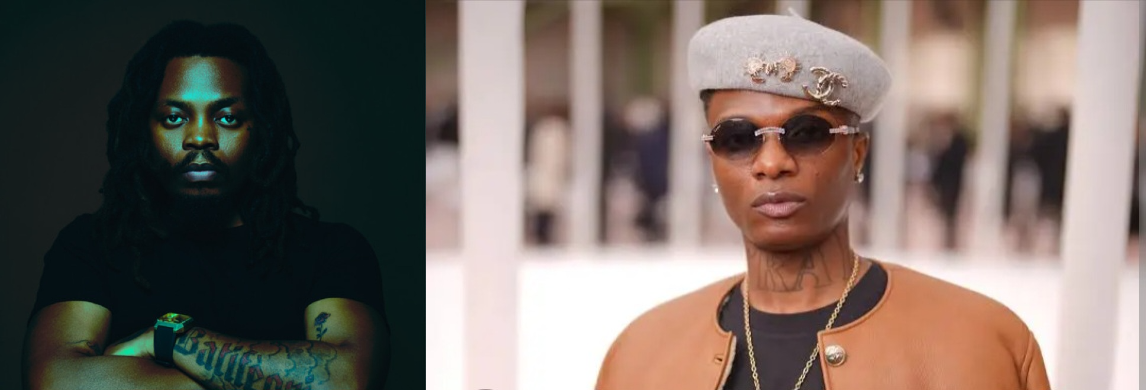
Nigerian music heavyweight Olamide Baddo has sparked widespread conversation across social media after naming fellow superstar Wizkid as the greatest Afrobeats artist since the legendary Fela Kuti.

The YBNL boss made the bold declaration during a guest lecture at York University in Toronto, Canada, On November 13th, where he spoke on the global rise of Afrobeats and its impact on African identity.
According to Olamide, Wizkid’s consistent delivery, genre defining sound, and influence on the international music scene have positioned him as the leading figure in Afrobeats after the genre’s pioneer, Fela Kuti. “Wizkid’s evolution, the way he has maintained relevance while pushing boundaries, is unmatched,” Olamide stated during his address, earning a wave of applause from attendees.

READ ALSO:This Is Totally Unacceptable -AGN Reacts to Taye Arimor, Peggy Ovire On-Set Clash
Speaking further, he emphasised that while many artists have contributed to the genre’s growth, Wizkid’s artistry, international reach, and cultural impact set him apart. “From Ojuelegba to Essence, Wizkid has made music that speaks to the streets and resonates globally,” he said.
With the video going viral quickly, fans on X have taken to the comment section, expressing mixed reactions.
WATCH VIDEO HERE; https://x.com/DAMIADENUGA/status/1988978343790645435?t=w0HyAkh1cwC45S-veRJ9FA&s=19
See comments here:
@ rich_aed wrote:” Burna Boy con soon enter your matter”.
@Teesaids wrote: “Olamide showing humility by not naming himself as greatest Afrobeats artist above Fela and Wizkid”.
Another X user @KingAkeze wrote:” Wizkid has been consistent since 2009 at the very highest level, no other artist has ever done that. He changed the game. Inspired a whole new era and a whole new generation.Most influential. Most helpful. Most talented. Most humble.Wizkid is the king of Afrobeats.”
However, regardless of the differing opinions, Olamide’s statement has reignited conversations around legacy, influence, and the evolving soundscape of Afrobeats a genre now commanding global attention and reshaping how African music is perceived across the world.


